5 Mistakes to Avoid When Working with an Offshore Development Center


About us
MoldoWEB is a software development company, located in Romania, specialized in providing outsourcing and team augmentation services for clients around the world.
Table of contents
- Mistake #1: Treating the Offshore Team as “Just a Vendor”
- Mistake #2: Unclear Requirements and Vague Expectations
- Mistake #3: Poor Communication and Irregular Feedback
- Mistake #4: Choosing Cost Over Fit
- Mistake #5: Not Assigning Ownership on Your Side
- How to Avoid These Mistakes
- Conclusion
Working with an offshore development center can give you and your company great opportunities to grow your product, and access skilled professionals. But it’s not something that just works by default. We have seen projects succeed and fail for reasons that had nothing to do with technical skills or code quality.
The majority of problems appear when small, important decisions are made early on. Things like unclear expectations, weak communication, or treating the offshore dev team as a separate unit instead of part of the product team. These mistakes are common, but the good news is, they’re avoidable.
In this article, we’ll walk through the five most common mistakes companies make when working with an offshore development center, and what to do differently to get the most value out of the collaboration.
Mistake #1: Treating the Offshore Team as “Just a Vendor”
One of the most common mistakes we see companies do is treating the offshore team just like a service you hand off work to, instead of a partner to build with. When the relationship is entirely transactional, teams tend to do exactly what is written in the task, nothing more, nothing less.
The thing is, software development needs context. And if your developers don’t understand why they’re building a feature, who the users are, or if they’re not involved in the long-term goals, decisions become mechanical. This can lead to unmet expectations, more back-and-forth, and you might end up with features that work well, but don’t really solve the problem.
Offshore teams perform best when they’re treated as part of the product team. This means sharing goals, involving them in long-term planning and decision-making. Working together with the offshore development center will improve this way, and your team will start thinking ahead, raise issues sooner, and contribute ideas, instead of just ticking off tasks from their to-do lists.
| Aspect | Vendor Mindset | Product Partner Mindset |
|---|---|---|
| Focus | Deliver tasks | Solve the problem |
| Context | Limited | Full product context |
| Ownership | Task-based | Outcome-based |
| Involvement | Reactive | Proactive |
Mistake #2: Unclear Requirements and Vague Expectations
The next common mistake is actually connected to the first one we talked about: starting work without being clear about your expectations or what “done” actually means in your project.
With unclear requirements, teams just end up guessing what needs to be done or how it needs to be done. This can result in features built in one way only to be reworked later because expectations were different. This slows things down and creates frustration on both sides.
But how does one make sure requirements are clear and understood within a project? Spoiler: you don’t need a 50-page instructions document; you simply need to set clear goals, priorities, and examples where possible. Even simple things like written acceptance criteria can make a big difference.
Mistake #3: Poor Communication and Irregular Feedback
Communication issues might not show up right away, but they can quietly slow everything down. Some signs of poor communication can be late feedback or rare updates within the team.
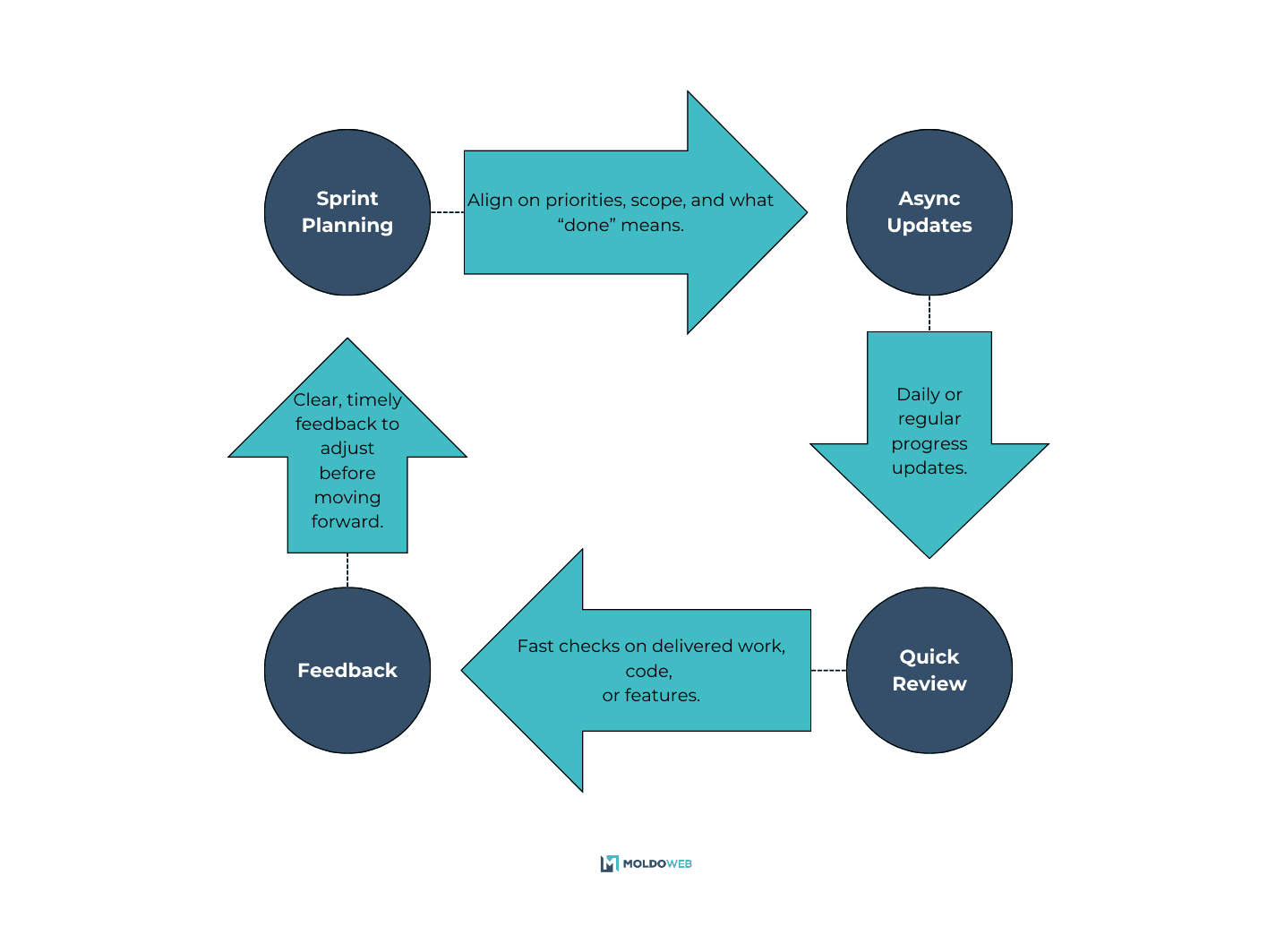
We’re not saying constant check-ins are the key here. Instead, focusing on consistency can definitely improve team communication and collaboration. If questions stay unanswered or feedback comes at the end of the sprint, the team is forced to make assumptions and might become less productive.
Simple habits help a lot here: regular check-ins, setting up channels for communication, and, very important, timely feedback to avoid rework later.
Mistake #4: Choosing Cost Over Fit
This one is common, and it’s easy to understand why. Budgets are important. But choosing an offshore development company just because they’re the cheapest option can cost you more in the long run.
A low rate can sound appealing, but it won’t help much if the team doesn’t understand your product, users, and overall goals. You end up spending extra time explaining things, fixing misunderstandings, or redoing work entirely. This time adds up fast.
So before going with the cheapest offshore development services, make sure to look at key aspects like experience, communication style, time zone overlap, and overall alignment.
Mistake #5: Not Assigning Ownership on Your Side
This one shows up more often than people like to admit. Everyone’s involved… but no one’s really in charge.
When there’s no clear owner on your side, the offshore team gets stuck waiting. Waiting for answers. Waiting for approvals. Waiting to know if they’re even working on the right thing. Progress slows down, not because the team isn’t capable, but because no one is steering.
You don’t need to micromanage or sit in every call. But you do need one person who can say “yes,” “no,” or “let’s do this instead.” Someone who understands the product, knows the priorities, and can unblock things fast.
Without that, even great developers end up guessing. And guessing is expensive.
How to Avoid These Mistakes
Most offshore problems don’t come from bad code. They come from missing basics. Managing a remote team can be just as smooth as managing an in-house team with clear processes and open communication.
Treat the offshore team like people who actually build the product with you, not a ticket factory. Share context, architecture decisions, and trade-offs. If they don’t understand why something exists, they’ll still deliver it…just not the way you expected.
Be painfully clear about requirements. Not long specs, just clear ones. What problem are we solving? What does “done” mean? What’s out of scope? A few clear answers beat ten vague Jira tickets every time.
Keep communication predictable. You don’t need daily meetings, but you do need a rhythm. Regular syncs, quick code reviews, and fast feedback prevent small misunderstandings from turning into rewrites.
And assign an owner on your side. One person who can unblock, decide, and say “yes” or “no.” Without that, the team waits, guesses, or builds the wrong thing, none of which scale.
Offshore teams work best when they’re treated like engineers, not resources. Do that, and most of these mistakes disappear on their own.
Conclusion
Many companies think that working with an offshore development center is risky by default. But with the right approach, and proper research, it can be a great opportunity to involve talented and skilled professionals in your project.
Just make sure to treat the offshore team as part of the product, keep your expectations clear from day one, and communicate regularly. These aspects make a big difference, and they will make offshore development feel just as smooth as working with an in-house team.
The good news is that all of these mistakes can be avoided easily once you’re aware of them. When everyone knows exactly what they’re working toward, what the long-term goals and requirements are, the code tends to follow.
If you do that, offshore development will be more than just a service. It will be part of your engineering team.